
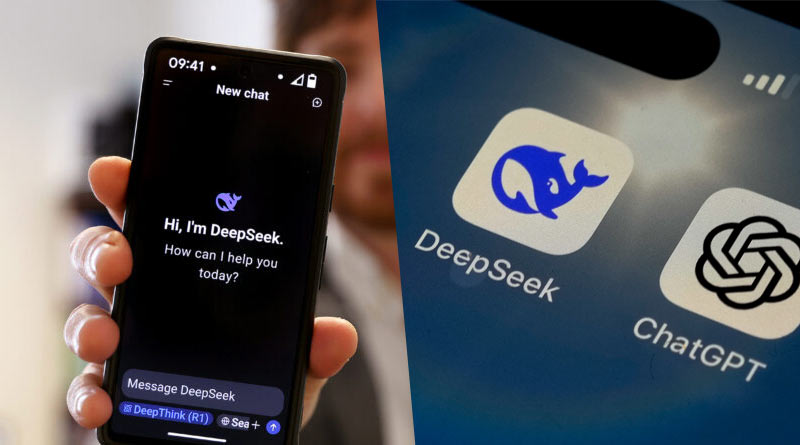
What is special about DeepSeek: The Chinese AI Model Challenging ChatGPT?
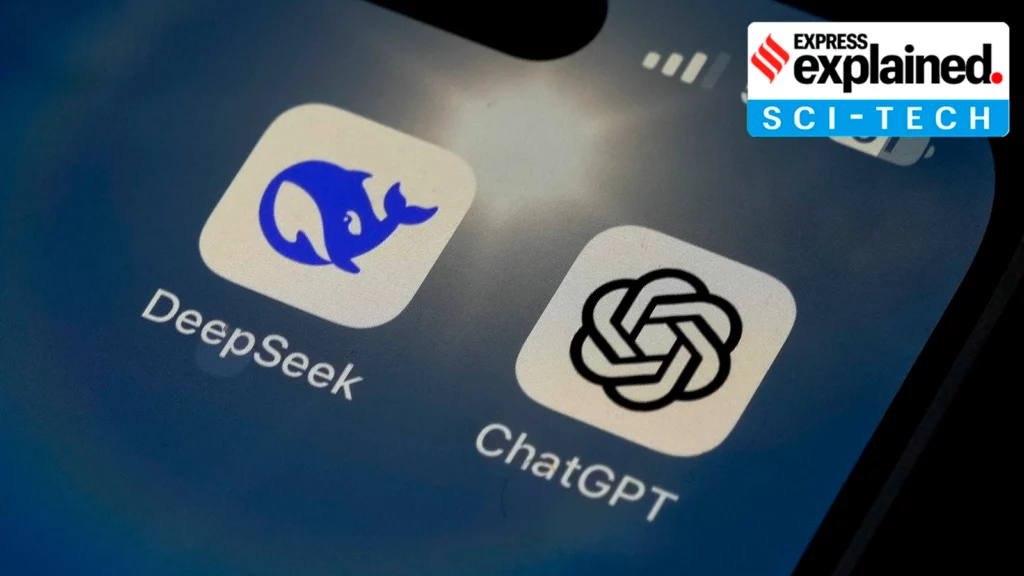
Artificial intelligence is evolving at a rapid pace, and a new player has entered the scene with groundbreaking advancements. DeepSeek, a Chinese AI startup, has shaken Silicon Valley by developing AI models that rival the world’s best at a fraction of the cost. Its latest AI assistant has even overtaken ChatGPT as the top-rated free application on Apple’s App Store in the United States. But what makes DeepSeek so special, and why is the US worried? Let’s dive deeper.
What is DeepSeek?
Founded in 2023 by Liang Wenfeng, an expert in AI and quantitative finance, DeepSeek is a rising force in artificial intelligence. Before establishing DeepSeek, Wenfeng led a hedge fund that leveraged AI to analyze financial data. Today, DeepSeek’s team consists of fresh graduates from top Chinese universities, working to develop open-source AI models that are empowering developers worldwide.
How is DeepSeek Different from OpenAI?
DeepSeek’s rapid ascent has drawn comparisons to OpenAI, one of the biggest names in AI development. However, DeepSeek stands out due to its unique approach:
- Advanced Reasoning Capabilities: DeepSeek R1, the company’s flagship AI model, mimics human thinking and provides reasoning before delivering responses—a feature that distinguishes it from competitors.
- Cost Efficiency: DeepSeek has developed its models at a fraction of the cost of OpenAI and Meta, challenging the notion that massive AI investments are necessary.
- Superior Performance: The company claims DeepSeek R1 outperforms rival models in mathematical tasks, general knowledge, and Q&A responses. It also ranks among the top models on Chatbot Arena, a UC Berkeley-affiliated leaderboard.
The US Concerns Over DeepSeek’s Success
The US has long sought to maintain its dominance in AI technology, going as far as restricting the export of high-end semiconductor chips, such as Nvidia’s GPUs, to China. However, DeepSeek’s success suggests that these restrictions have not significantly hindered China’s AI progress. This development raises questions about the effectiveness of US trade policies and could pressure American AI giants like OpenAI, Meta, and Microsoft to reconsider their pricing strategies. Notably, these companies have already committed over $65 billion this year to AI infrastructure.
Challenges and Limitations of DeepSeek
Despite its impressive rise, DeepSeek is not without its drawbacks:
- Censorship on Sensitive Topics: Like other Chinese AI models, DeepSeek exhibits self-censorship. It avoids discussing politically sensitive topics such as the 1989 Tiananmen Square protests or a potential Chinese invasion of Taiwan.
- Global Trust and Adoption: While DeepSeek’s open-source models have attracted global attention, concerns about government influence and censorship may limit its adoption outside China.
DeepSeek’s emergence as a formidable AI competitor is reshaping the global AI landscape. Its cost-effective yet powerful models are proving that innovation does not always require billion-dollar investments. However, its success also raises geopolitical concerns, particularly for the US, as China continues to advance in AI despite sanctions and restrictions. As the AI race intensifies, it will be interesting to see how DeepSeek, OpenAI, and other major players adapt to this rapidly evolving landscape. Like this post? Don’t forget to check out our other short stories in our Technology section.