

All You Need To Know About NASA’s Human Moon Mission ‘Artemis I’
The National Aeronautics and Space Administration (NASA) has a number of space missions planned for the next few years, all of which will explore various areas of outer space and expand mankind’s knowledge of the world beyond Earth. Following the historic Apollo 11 mission, which sent the first humans to the moon in 1969, NASA is planning another mission to the lunar surface, dubbed Artemis 1. The United States space agency’s new lunar mission is set to be iconic in a different way.
What Is NASA’s Artemis Program?
Artemis is a NASA space mission that aims to land the first female astronaut and the first astronaut of colour on the Moon’s the South Pole. It is NASA’s first crewed Moon mission since Apollo 17 in 1972. The Artemis space missions are primarily concerned with lunar exploration, but NASA’s long-term objectives are far more ambitious.
NASA plans to launch a future crewed mission to Mars using the technology and research developed during the Artemis spaceflights. The NASA ‘Moon to Mars’ plan entails the construction of a new space station in lunar orbit and, eventually, a habitable Moon base.
Why is the Programme Called Artemis?
Artemis is the mythical Greek goddess of the Moon and Apollo’s twin sister. The connection to the mission that first sent humans to the Moon 50 years ago is thus clear. Meanwhile, the crewed spacecraft currently under development is known as Orion. Orion is one of the most easily recognised constellations in the sky, and in Classical mythology, he is Artemis’ hunting companion.
Why is NASA Going Back to the Moon?
NASA’s goal with Artemis is not simply to replicate the feats of the Apollo missions, but to go to the Moon “and stay there.” This includes looking into the possibility of establishing bases both in lunar orbit and on the Moon’s surface, though the primary goal, for the time being, is to return humans to the Moon by the middle of the decade.
Among the key NASA mission objectives are:
- Equality: a chief aim for NASA is to land the first woman and first person of colour on the lunar surface.
- Technology: from rockets to spacesuits, the technologies currently being developed are designed to pave the way for future deep-space missions.
- Partnerships: the Artemis programme is one of NASA’s first large-scale collaborations with commercial companies, such as Blue Origin, SpaceX and Boeing.
- Long-term presence: where the Apollo 17 crew spent three days on the lunar surface, Artemis aims to establish a base to extend the trips to weeks and possibly months.
- Knowledge: as more is known about the Moon compared with 50 years ago (and technologies have greatly advanced), NASA claims that this next series of missions will be able to retrieve samples more strategically than during the Apollo era.
- Resources: the discovery of water on the Moon and potential deposits of rare minerals hold promise for both scientific and economic exploration and exploitation.
How will NASA get back to the Moon?
There are four main phases of the Artemis Moon missions. These include:
- Orion spacecraft
- Lunar Gateway(small space station orbiting the Moon)
- Moon Landing Module( The lunar landing vehicles will take cargo and humans from the Lunar Gateway to the Moon’s surface.)
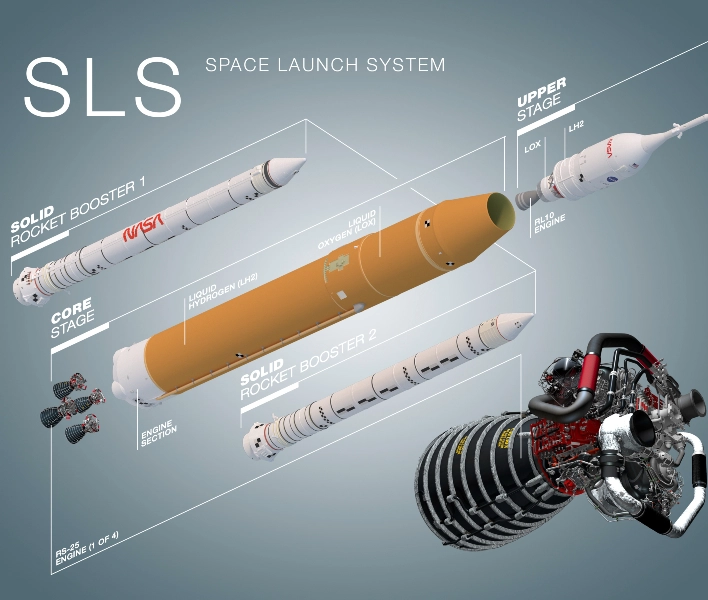
- Space Launch System (SLS)
When will NASA’s Artemis 1 be launched?
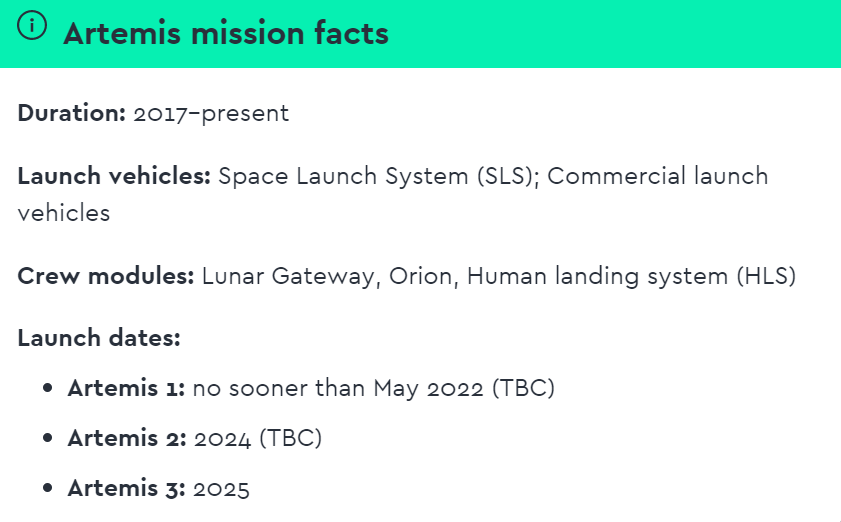
NASA is set to launch the Artemis 1 spacecraft on August 29 this year, according to the official schedule. The spacecraft is set to reach the launch location by August 18, after which weather and other relying factors will be evaluated.
After the success of the Artemis I mission, the Artemis II and III will also be announced by NASA, which are aimed to be launched around 2024. Liked this post? Don’t forget to check out our other short stories in our Quick Read section.